American Kennel Club AKC titles are official abbreviations added to a dog’s registered name, recognizing achievements in dog sports such as obedience, agility, tracking, and conformation. These titles, which can be prefixes (e.g., Champion) or suffixes (e.g., Companion Dog), are earned by qualifying in sanctioned AKC events. Key categories include obedience (CD, UD), agility (PACH, AXJ), fitness (FITB, FITG), and working roles like search and rescue. We have started earning titles in AKC Trick Dog, AKC Fit Dog, and AKC Virtual Home Manners. I would love to eventually expand into agility & more, but we are starting with these.
Earning AKC titles is a big accomplishment to be proud of! To earn a title, it takes a lot of time, effort, dedication, and ofcourse a good tempered dog willing to work. As pet owners, we may already do many of these things for fun, no recognition needed. As breeders though, it’s important that we have an outside 3rd party to evaluate and validate our efforts and the accomplishments of the dogs we choose to breed.
Earning & showcasing our AKC Titles is another step we take as responsible breeders to prove our dogs and prove ourselves. With these titles, along with our website, Facebook page, OFA Health Testing, and annual Chimera Family Reunions, you can see with full transparency that our dogs are healthy, active, intelligent, respond well to their humans, that they are well cared for, well trained, that they have excellent pet temperaments, and that they live great lives filled with fun and love!
Some people could argue that these titles are not impressive, that all breeding dogs should be able to do these things – we do agree, they should be able to!! That is why we are investing the time and money to PROVE it and show it transparently with the AKC. How many breeders are willing to do that? Or will they just say their dogs are wonderful with great temperaments, with no external evaluation, evidence, or provem accomplishment? We enjoy working with our dogs and giving them great lives filled with love, treats, and adventure. They don’t sit in crates all day used only for breeding. They are part of our family & a huge part of our life. We love the time devoted to these babies and happy to share it publicly.
The AKC Titles are only one piece of the overall picture that we hope shows how wonderful our dogs are, how much we care, and how much of ourselves we invest into your future puppy.

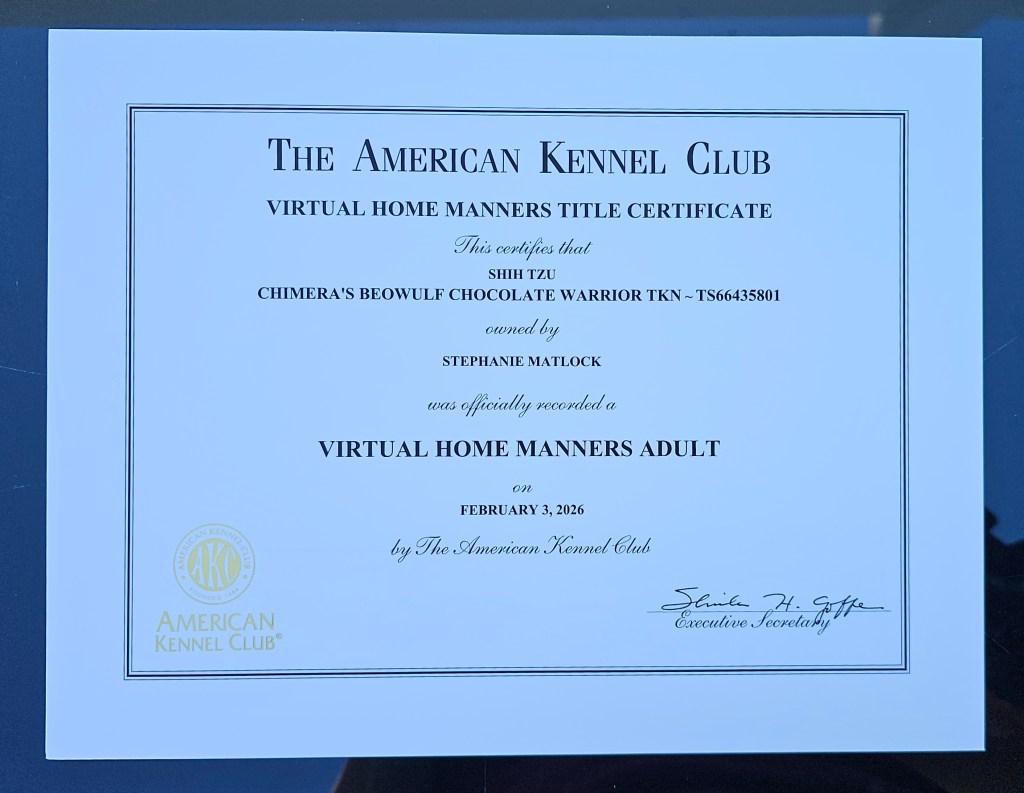
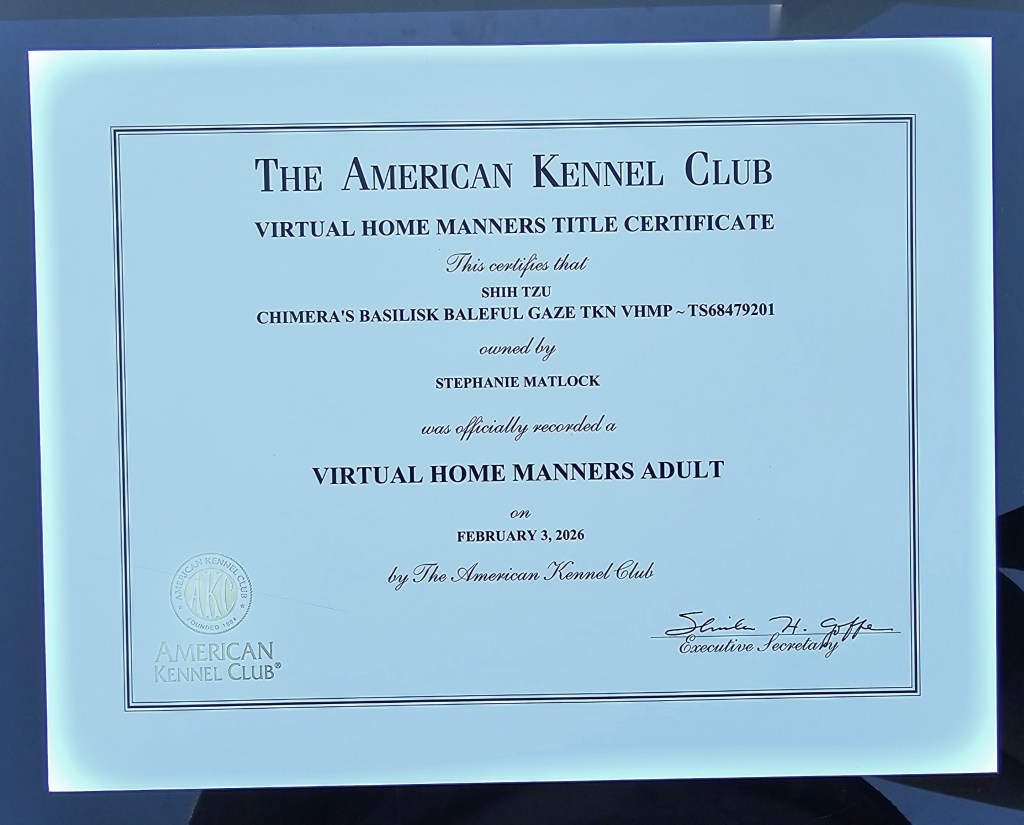
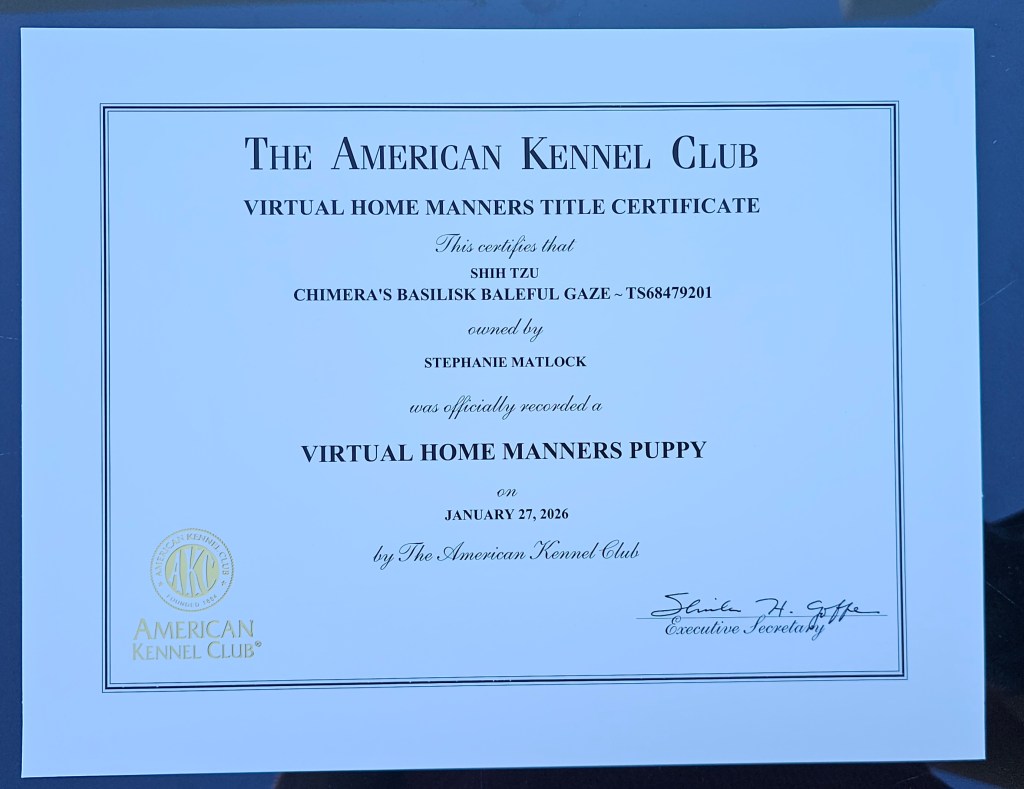
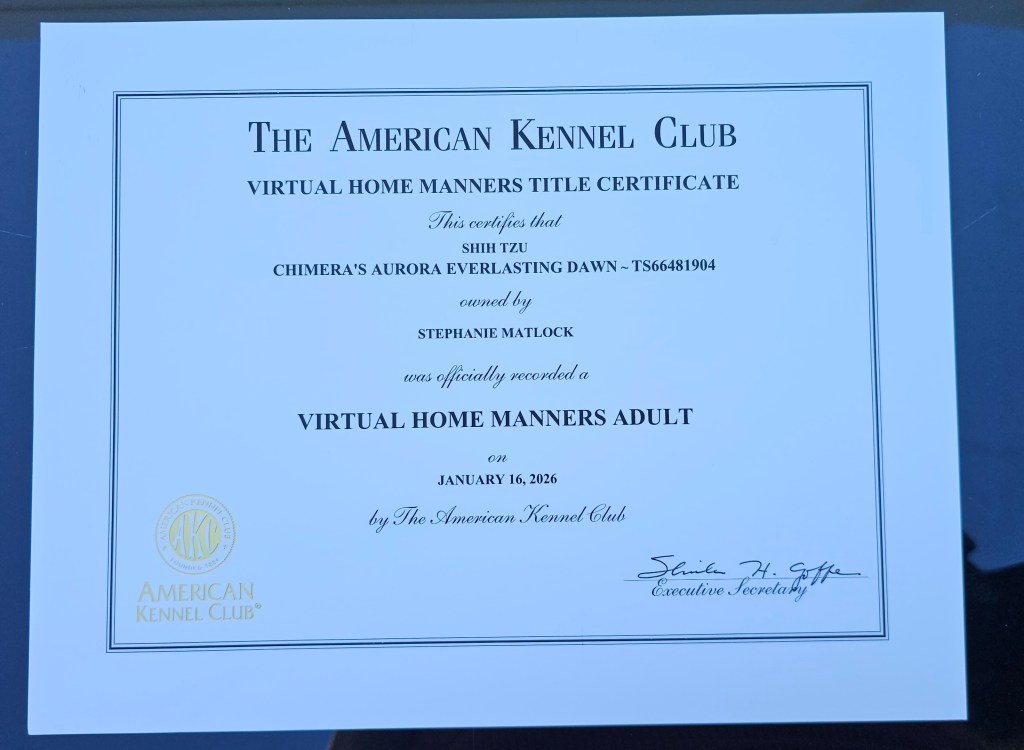
AKC Home Manners
AKC HOME MANNERS PARTICIPENT GUIDE
The Virtual Home Manners tests assess ten skills that well-mannered pet dogs need in the home setting. The skills relate to the dog owner having control over the dog, being able to walk the dog (which is one of the most frequently cited activities that owners want to do with their dogs) and developing a bond with the dog during playtime.
For this title, the following skills are tested and proven:
1. ALLOWS OWNER TO PET AND GROOM THE DOG.
- The exercise begins with the owner briefly petting and talking to the dog.
- After briefly petting the dog, the owner will brush the dog. The dog will allow the owner to brush its head/chin, shoulders, back, chest and belly in any order.
- The dog owner will also check the ears and feet briefly.
- For the video, the owner will pet the dog briefly and then brush each of the specified areas (head/chin, shoulders, back, chest and belly) 2 to 4 times in any order.
- Depending on the size of the dog, the owner may stand, sit, or kneel to pet and groom the dog.
- The dog may be placed on a grooming table or platform. If the dog is placed on a grooming table, the grooming loop (that goes around the neck) should not be used for this test item.
- The dog should not resist or try to get away, and should show no signs of aggression. The owner may talk to the dog during petting and grooming.• The dog may lie on his/her back while his/her belly is brushed.
- Depending on the dog’s coat type, the equipment used may be a brush or grooming mitt.
2. SIT ON COMMAND – NO LURE
The dog will respond to the owner’s cue (verbal, hand signal, or both) to “sit.”
- For the video, the dog will sit 1 time when cued by the owner.
- The owner will stand in front of or to the side of the dog and will give the dog a hand signal and/or verbal cue such as, “Sit” or “[Dog name], sit.”
- Lures or “pretend food” in a closed hand may not be used to guide the dog into position, but food rewards following the behavior are acceptable.
3. DOWN ON COMMAND – NO LURE
The dog will respond to the owner’s cue (verbal, hand signal, or both) to “down.”
- For the video, the dog will down 1 time when cued by the owner.
- The owner will stand in front of or to the side of the dog and will give the dog
- Lures or “pretend food” in a closed hand may not be used to guide the dog into position, but food rewards following the behavior are acceptable.
4. COMES WHEN CALLED
The dog will come when called from 20 ft. or another room. This skill is tested in the house.
- For the video, the dog will come 1 time when called from 20 ft. by the owner.Or, with the dog in another room, the owner will call the dog to come.
- The dog may be in any position (sit, stand, down) when called.A helper may be with the dog in another room if this version of the skill is selected.
- The owner should give a single command such as a verbal cue, “Come!” or “[Dog’s name] Come!” rather than “Come, Come on, Come, Come!” A hand signal may also be used (alone or with the verbal command).
- Dogs do not have to “sit front” when they get to the owner.
5. MANNERS RELATED TO FOOD
Will demonstrate good manners in the presence of food. This exercise is done indoors.
- For the video, choose one of these two options:
- 1) the owner sits to have a snack, or
- 2) the owner places the dog’s dish (with food) on the floor.
- OWNER SITS TO HAVE A SNACK
- Owner sits at table or counter and eats a snack. The dog should be nearby. The dog can sit or lie down, and should be under control and not begging.
- There should be about 10-15 seconds of video for this skill.
- When the owner is finished eating, the dog may be rewarded with a treat.
- OWNER PUTS DOG’S DISH DOWN
- Owner puts some food in the dog’s dish.
- Owner may take the dish to where the dog is fed.
- Owner puts the dish down. The owner may cue the dog, “Wait” or “Get back” if necessary.
- Owner may say something like, “Okay,” to indicate to the dog he can eat the food (dog has waited about 5 seconds).
- The dog should not be pushy, lunging for the food, etc.
6. DOORBELL OR KNOCK ON DOOR – DOG BEHAVES APPROPRIATELY
The dog will behave appropriately when the doorbell rings or there is a knock on the door.
- For the video, a helper can ring the doorbell, or the owner can activate a doorbell sound.
- When the doorbell rings or someone knocks, the dog should not bark excessively. The dog should be under control.
- The owner may cue the dog to sit, down, or go to its place before opening the door.
- The owner should open the door and say a few words, (to the helper or a pretend person), then close the door.
- The dog may be rewarded for staying in a sit, down, or at its place.
7. GO TO PLACE/CRATE – STAY 1 MINUTE
The dog will go to his or her ‘place’ or crate and will stay for 1 minute.
- For the video, the owner will give the cue for the dog to go to its “place” (or “bed”, “crate”, etc.). Starting with the dog at the owner’s side, the owner will give the cue (verbal, hand signal or both) and the dog must go to its “place” 10 ft. away.
- The dog must lie down in its “place.”
- When 1 minute has passed, the owner may go to the dog to release it.
- If a crate is used, the owner may choose to leave the door open or closed.
- The dog may be rewarded at the end of 1 minute if it has stayed in its place.
8. DEMONSTRATES RELATIONSHIP – No food rewards in this exercise
The owner (or a family member) and dog will demonstrate that they have a good relationship by playing together. The dog will play indoors with the owner or family member.
- For the video, the owner and puppy will demonstrate playing for about 10 seconds.
- The owner will choose at least 1 activity for play: hide & seek, scent game with 3 cups, do a trick, play with a toy (stuffed animal, etc.•
- Depending on the activity, the owner may stand, kneel or sit.
9. OUT FOR A WALK
The dog will walk on a leash (outside).
- For the video, the exercise will begin indoors with the owner saying something to the dog such as, “Let’s go for a walk.”
- The owner will put the leash on the dog and exit the door. The dog must remain under control and not drag the owner out of the door.
- The video may stop after exiting the door and start again once the owner and dog are outside.
- Once outside, the owner and dog should take a short walk to include a turnor about turn, and a brief fast pace of 4 to 5 steps (“Let’s hurry!”)
- The dog does not have to be in the heel position.
- The dog does not have to sit when the owner stops.
- The total time for the demonstration of the walk outside will should be about 10 to 15 seconds.
- The dog should be walked on a regular leash (not a retractable leash). The dog may wear a buckle collar, martingale, or body harness.
- If the dog has been trained, the owner may cue the dog to “heel,” but the heel position is not required.
- The dog should not be pulling on the leash. The owner may use food to encourage walking on a loose lead.
10. EXERCISE OUTSIDE
The owner or a family member will provide the dog with structured (owner facilitated) outdoor exercise.
- The dog will fetch a toy/ball/soft disc, chase, swim, or run with the owner.
- For the video, about 10 seconds of exercising will be shown. If the dog earned the Virtual Home Manners Puppy title, choose another form of exercise to demonstrate in this VHM Adult video.
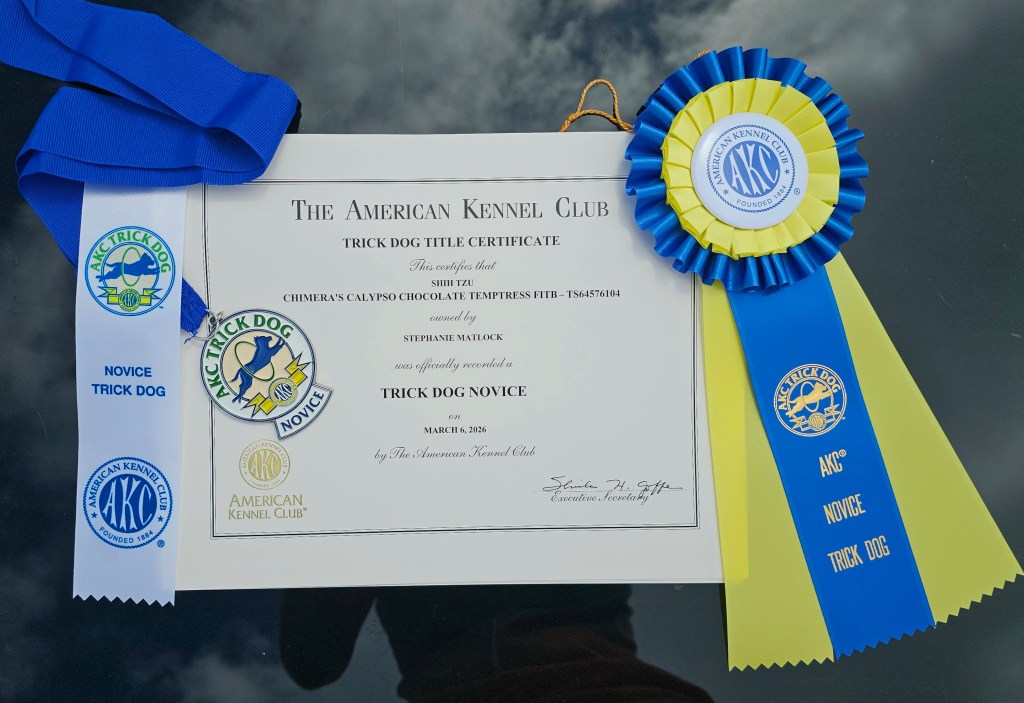
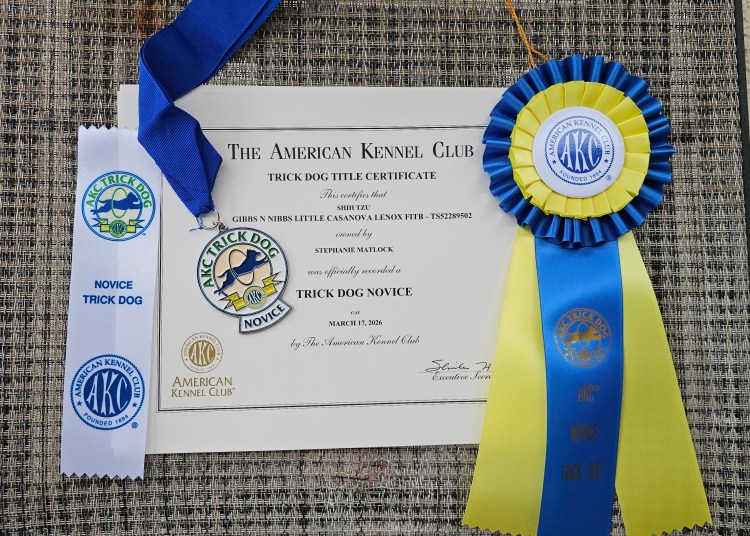
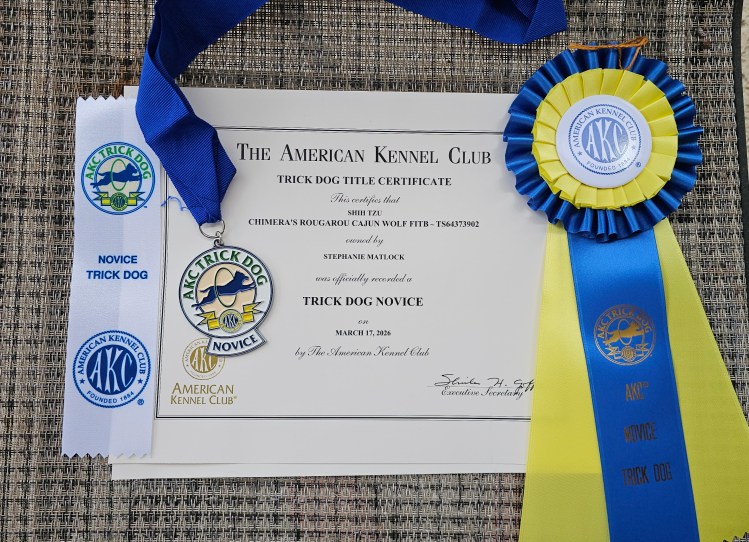
AKC TRICK DOG TITLE
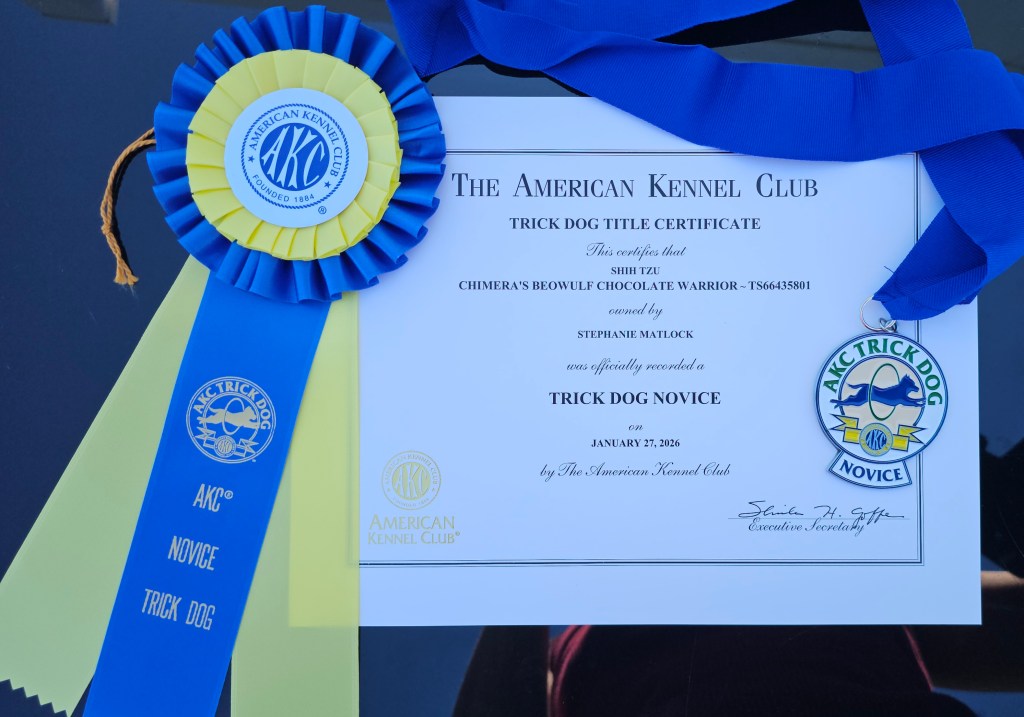
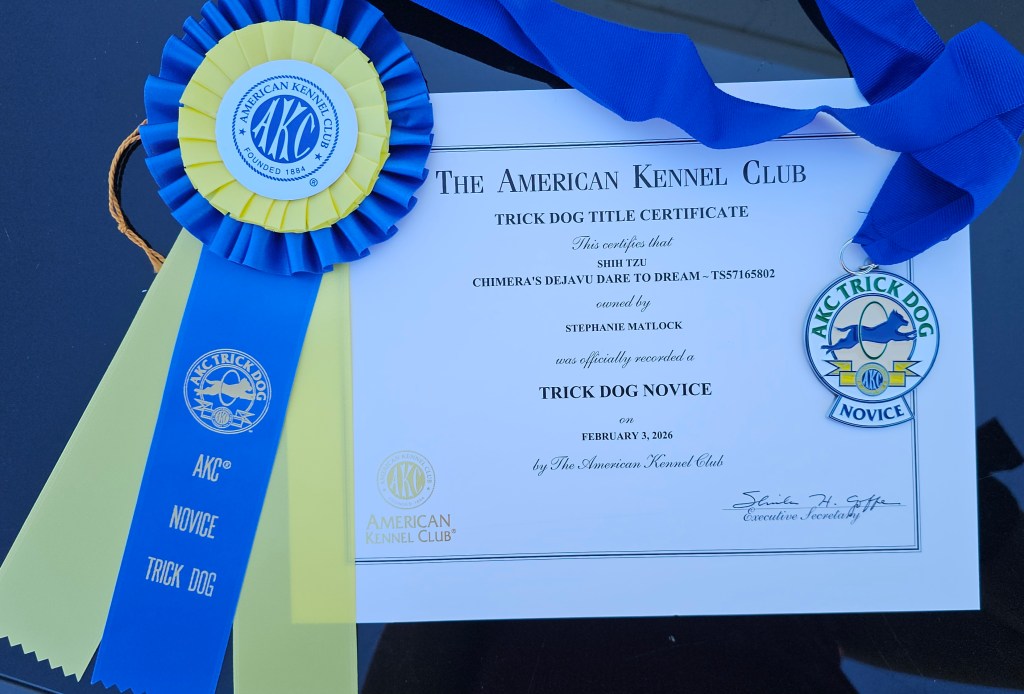
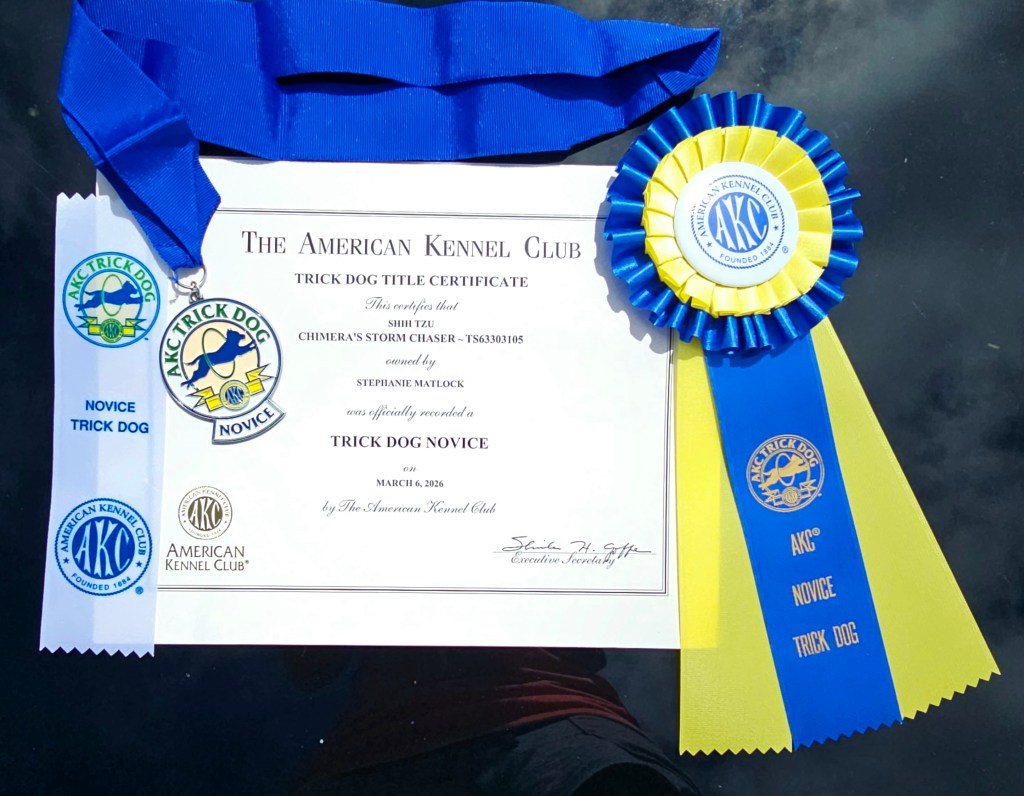
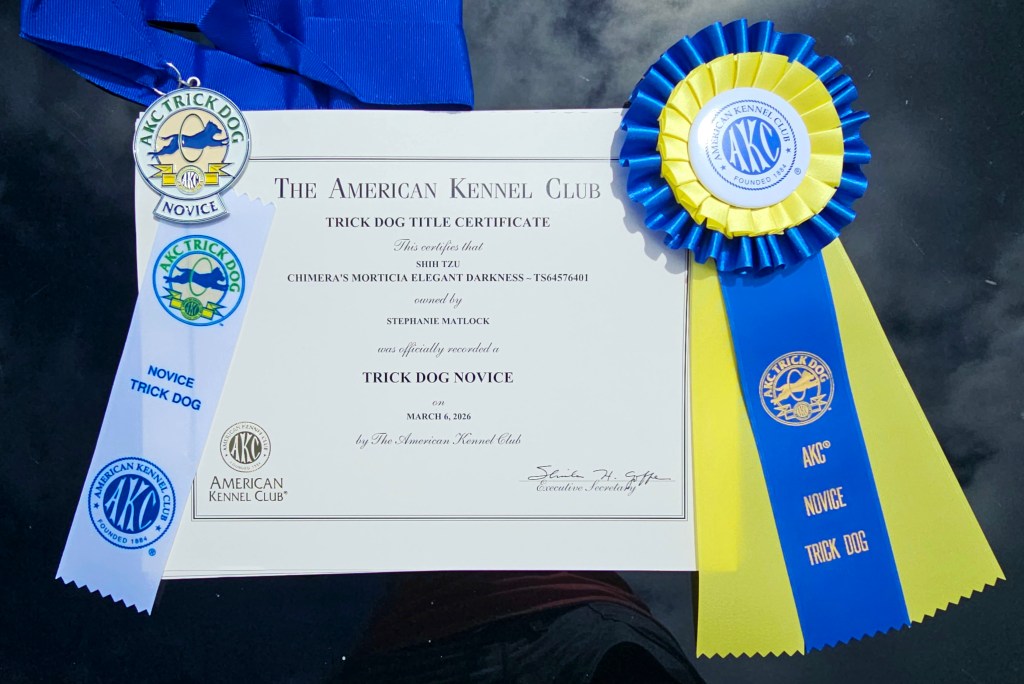
AKC Trick Dog is one of AKC’s most popular training programs because trick training is fun for both dogs and their trainers. I feel this title is important for us to achieve because it helps to show our relationship with our dogs, our dogs ability to learn – which shows the time we have spent training, as well as you can really see different aspects of the dogs personalities in their training videos. Some dogs are very driven. Some are super smart. Some meander through commands. Some race through commands, eagerly! Some are very food driven and will do anything we ask in order to earn that treat. Some eat up the praise with sweet talk and petting. When you watch the AKC Trick Dog Title Submission videos on different dogs, you can see their different personalities shine through. Some take more work than others, which also showcases the different personalities. Not everyone wants an active, smart as a whip puppy that needs lots of stimulation and guidance. Some want a more laid back, easy going pup that doesn’t need as much from you. These are going to be the slow poke trainers, and you can see it in the videos! So while in theory, the higher the accomplishment, the more impressive, I am also using these titles and videos to show real life differences in personalities, temperament, energy level, personal connection with each dog, their learning style, and their eagerness for learning. In earning awards, its usually more is better, but in choosing a puppy, or evaluating the parents of a companion breed, some people may not be looking for the highest achiever, but different, more mellow traits instead! I find the AKC Trick Dog Titles very valuable in assessing different dogs and even puppies, in certain areas. Plus, its absolutely a ton of fun!
You can teach your dog tricks yourself, or you can go to a training class.Tricks are behaviors that are designed to entertain others.
AKC Trick Dog ranges from very simple novice tricks such as teaching your dog to get in a box on cue, to complex tricks that are several behaviors chained together in one exciting sequence.
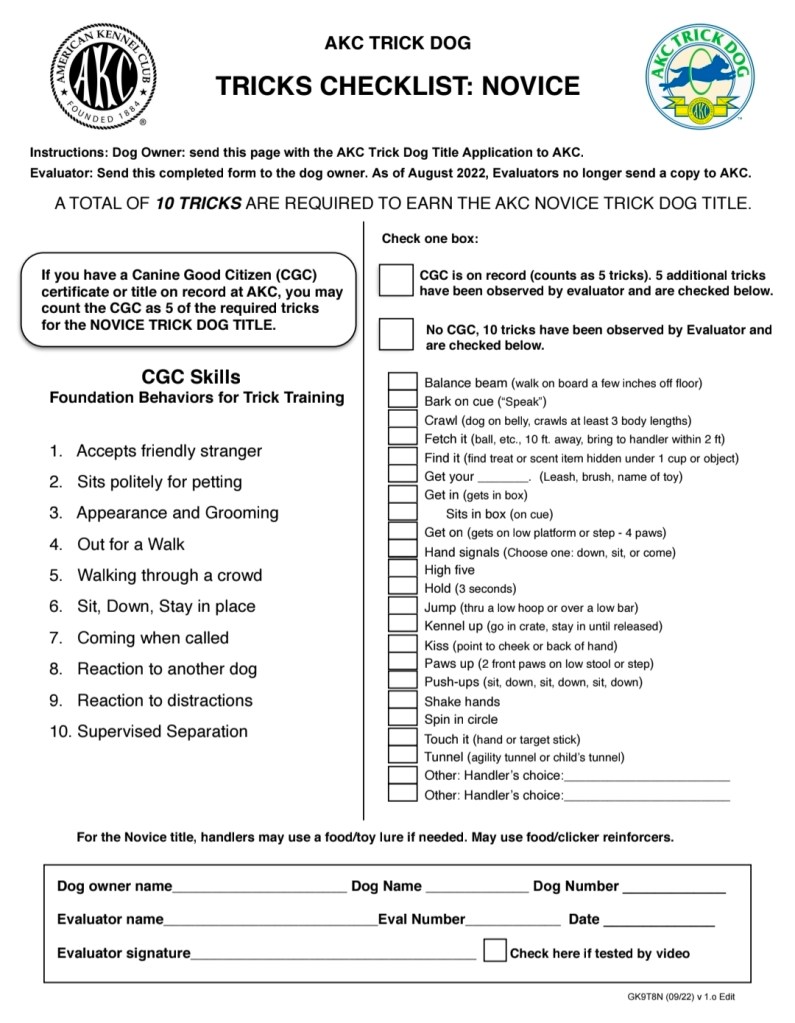
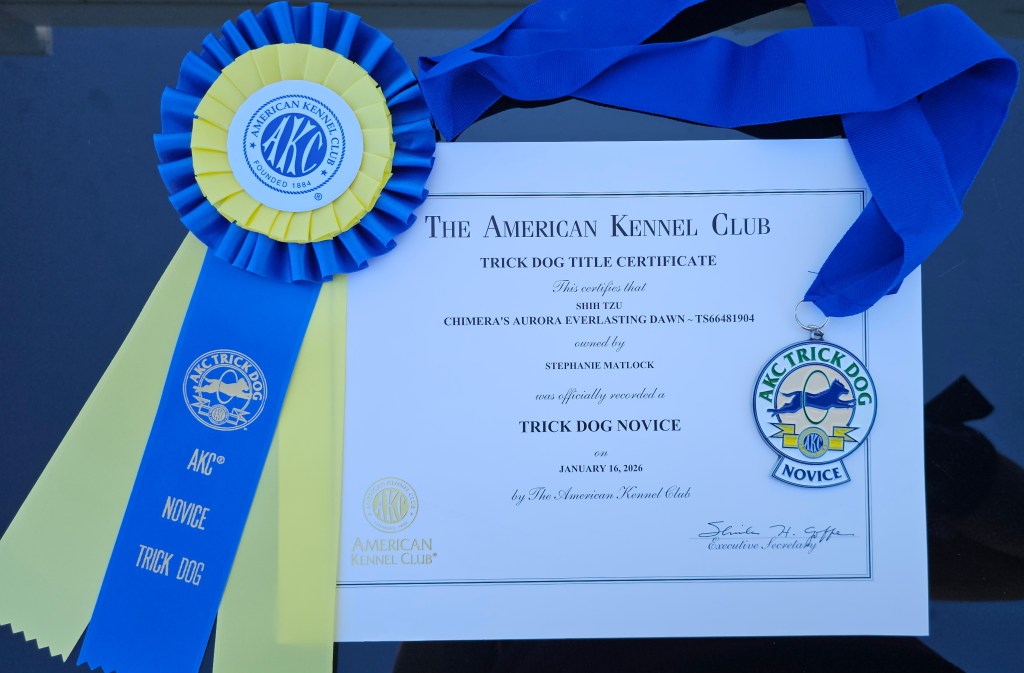
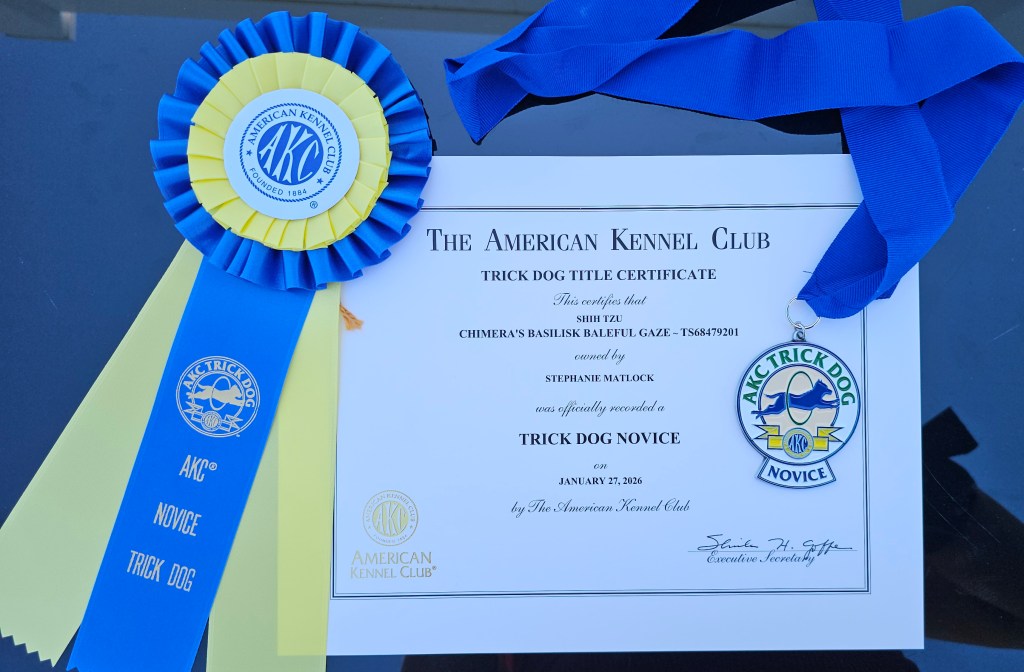
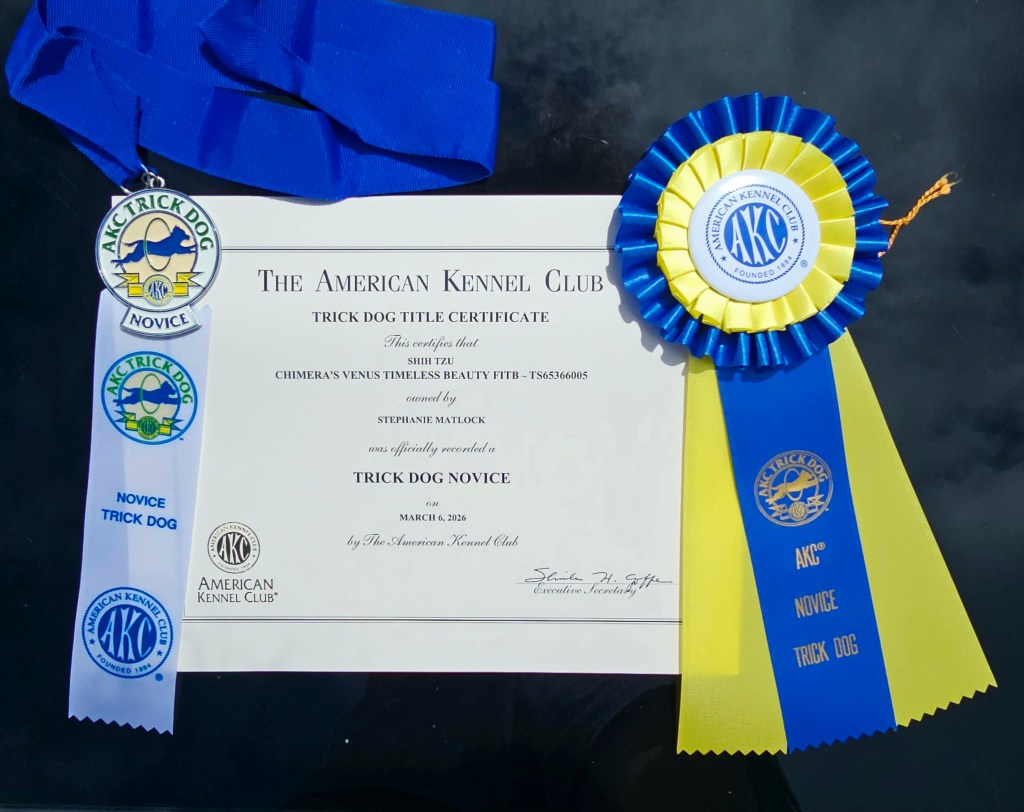
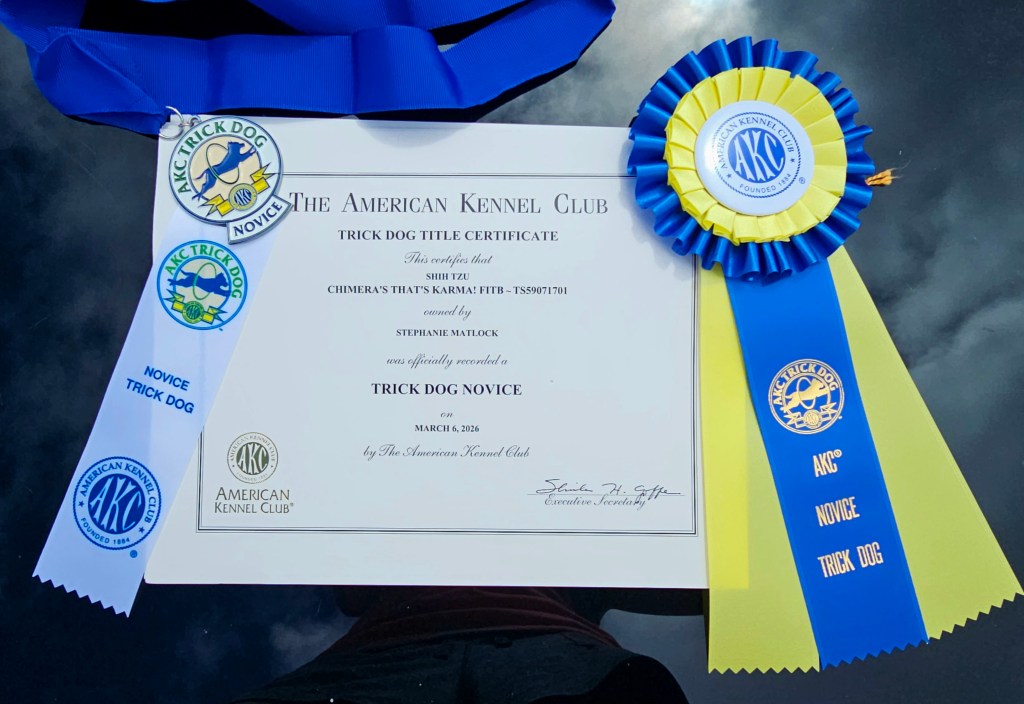
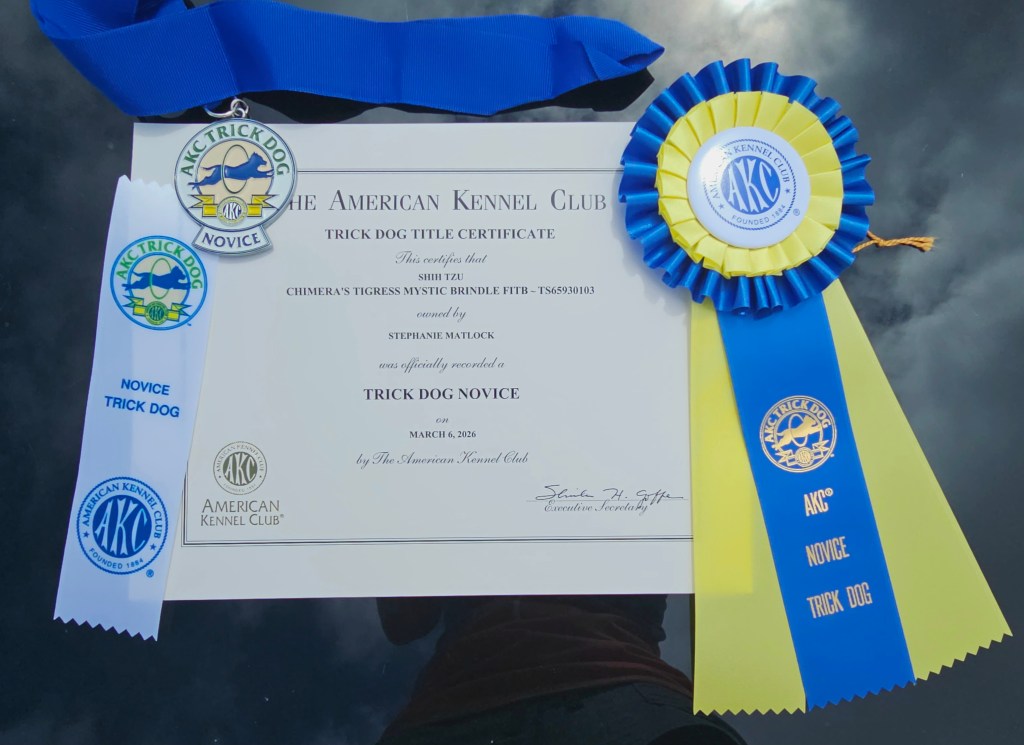
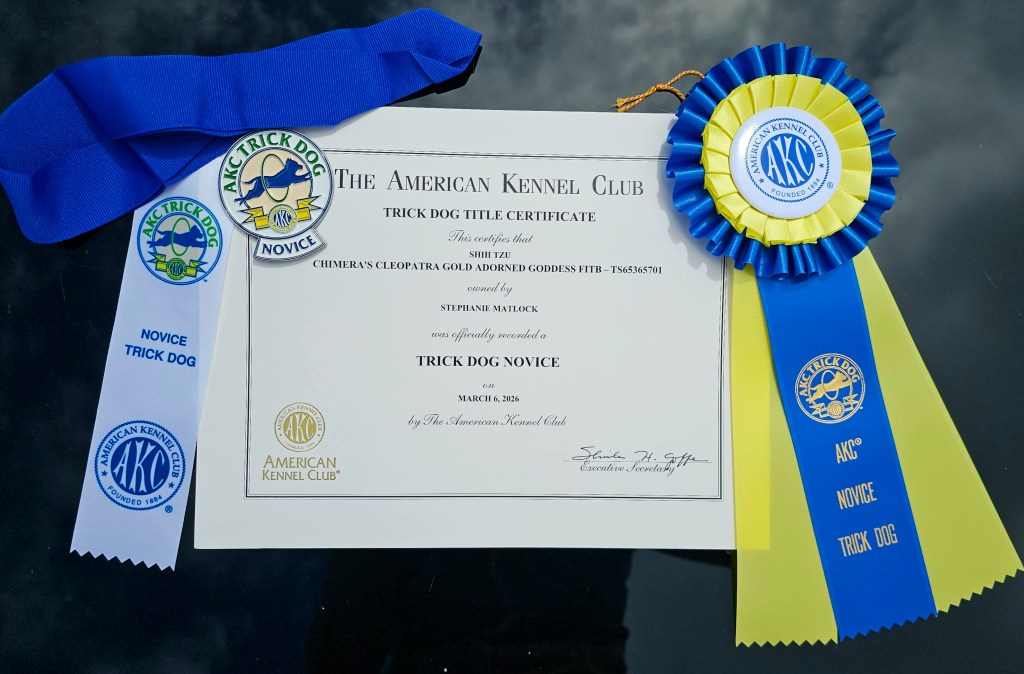
AKC Trick Dog Titles start at the NOVICE level. I have taught this level of tricks to puppies as young as 7 weeks old – Karma & Roo puppies, ofcourse! Very driven, very intelligent puppies. Other puppies may take longer to learn, and that’s ok – the process is absolutely fun! No reason to rush to the goal.
After NOVICE, trick difficulty and complexity increases.
There are five AKC Trick Titles you and your dog can earn:
- AKC Novice Trick Dog (TKN)- Your dog performs 10 skills from the Novice list. (see link to “Application” below for lists of skills). If a dog has a Canine Good Citizen (CGC) certificate or title on record at AKC, it can do 5 Novice tricks (CGC + 5) to earn the Novice title. See the list of tricks here.
- AKC Intermediate Trick Dog (TKI) – Your dog must have the Novice title, plus perform 10 Intermediate tricks. See the list of tricks here.
- AKC Advanced Trick Dog (TKA) – Your dog must have the Intermediate title, plus perform 10 tricks from the Advanced list. See the list of tricks here.
- AKC Trick Dog Performer (TKP) – In this title, handlers perform a short routine with at least 10 tricks with at least 3 tricks using props. See the requirements here.
- AKC Trick Dog Elite Performer (TKE) – In the highest level of Trick Dog, the Elite Performers perform a routine that has a story/script. At least 5 props are used. See the requirements here.
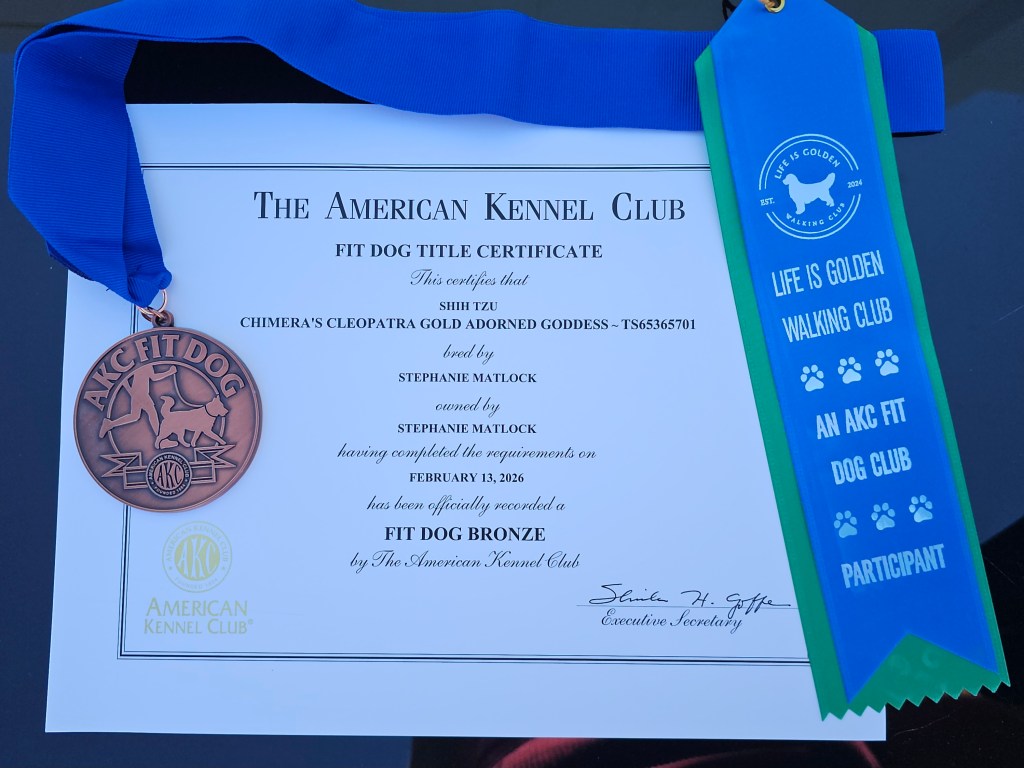
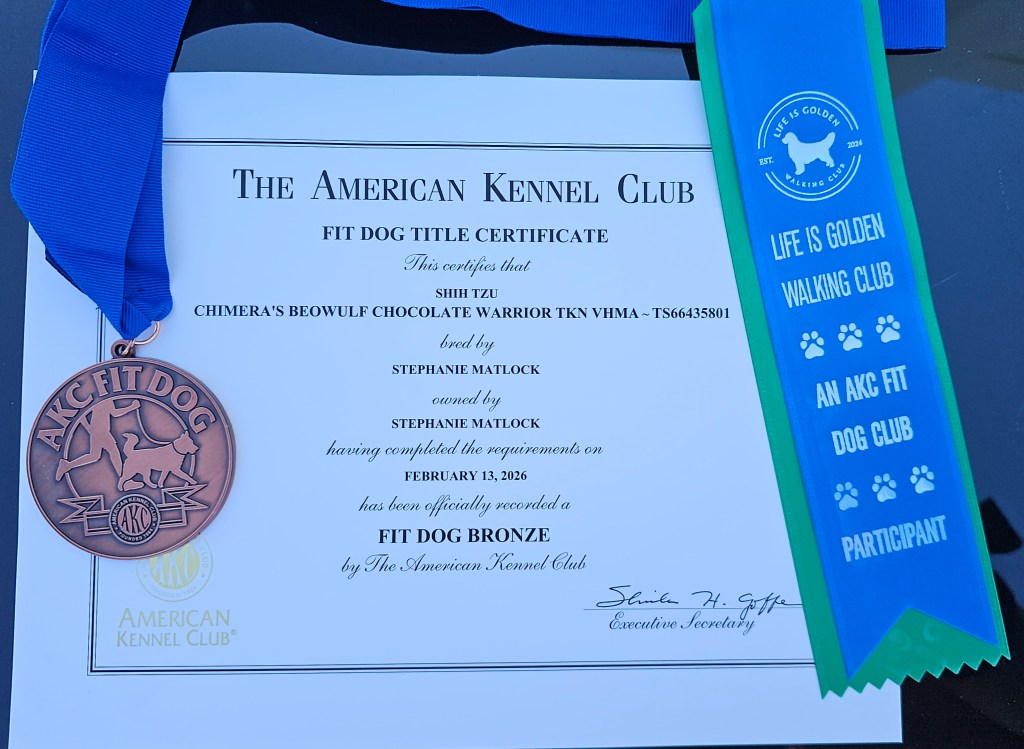
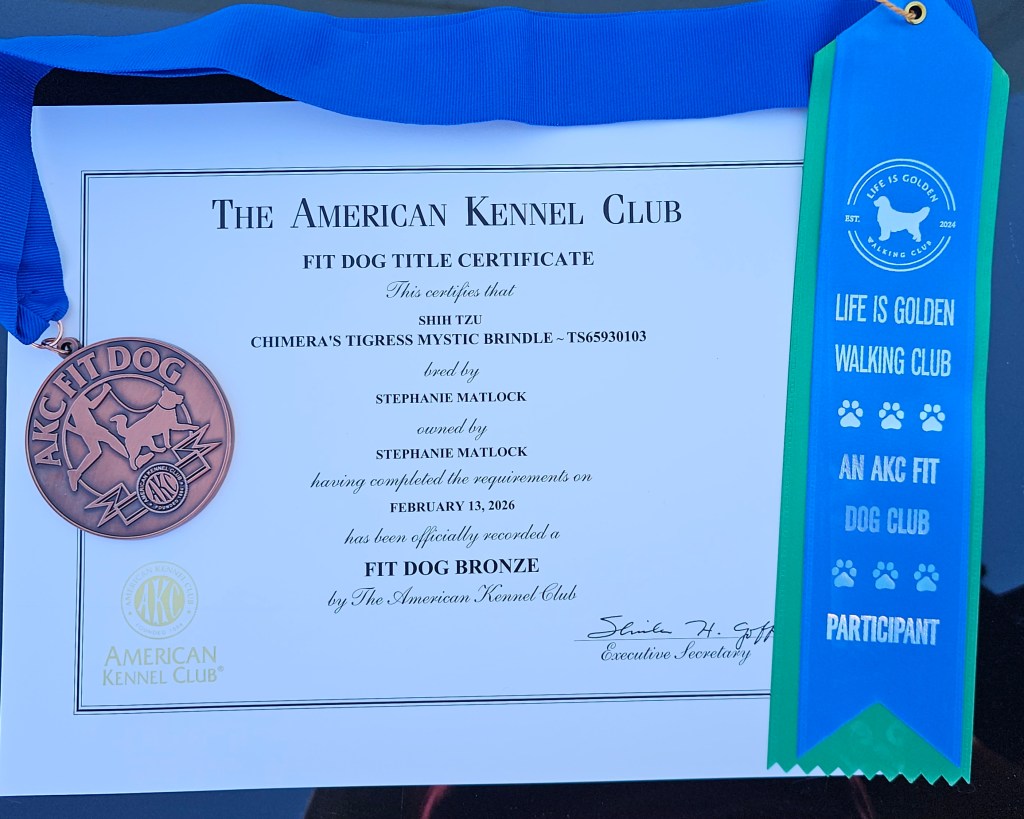
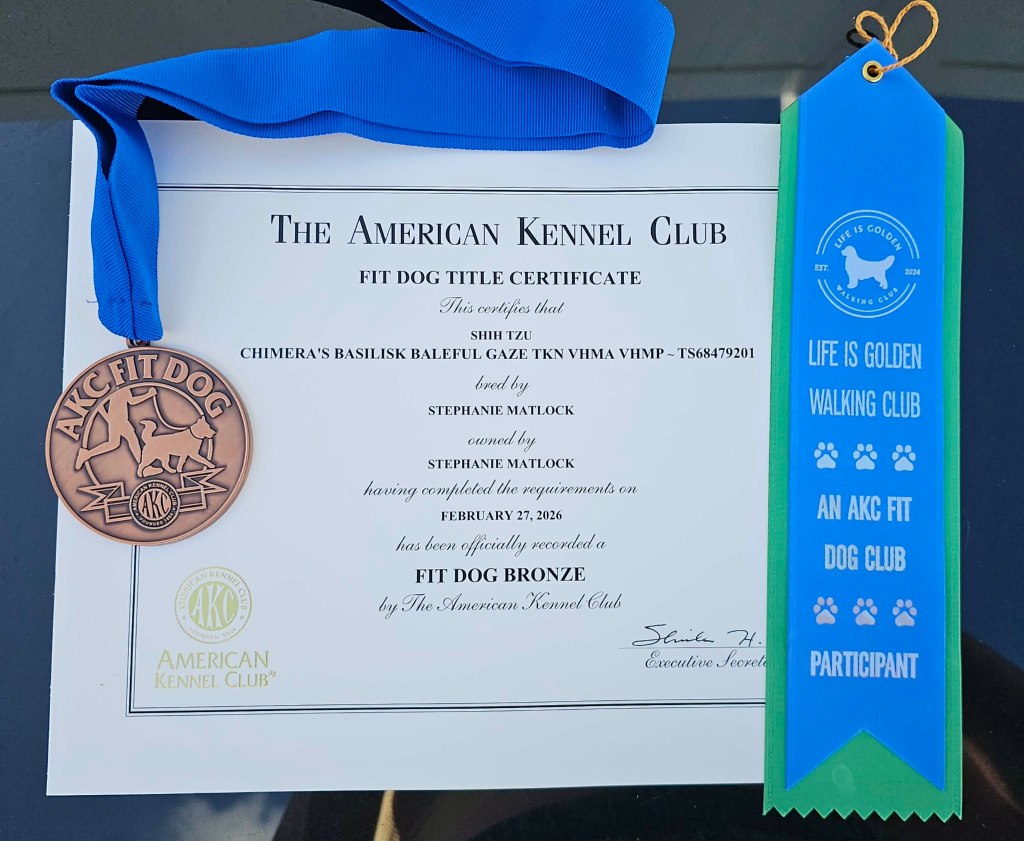
AKC FIT DOG
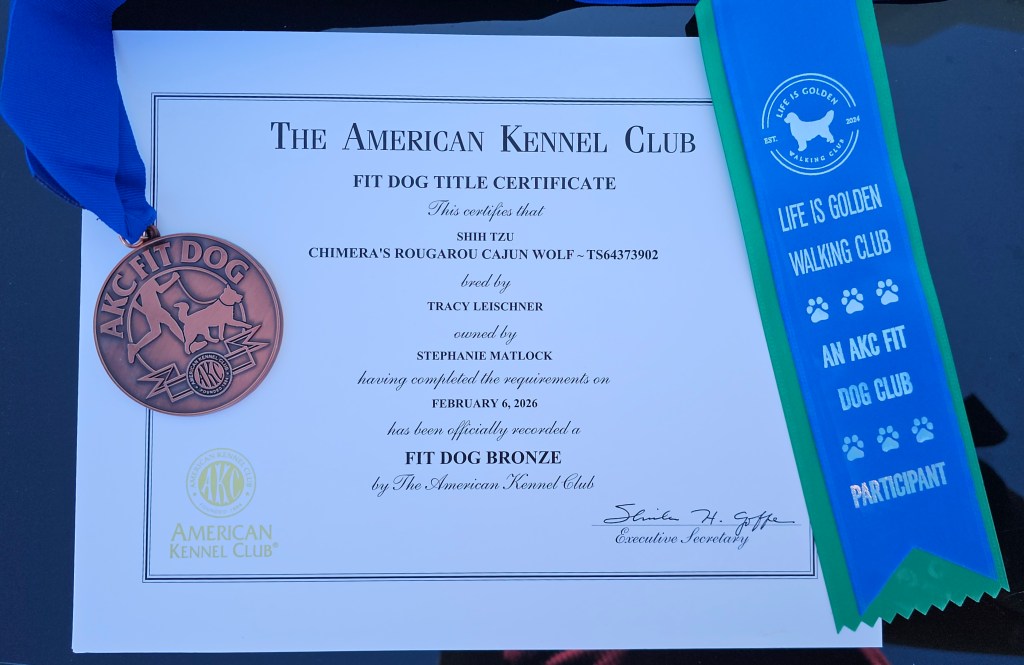
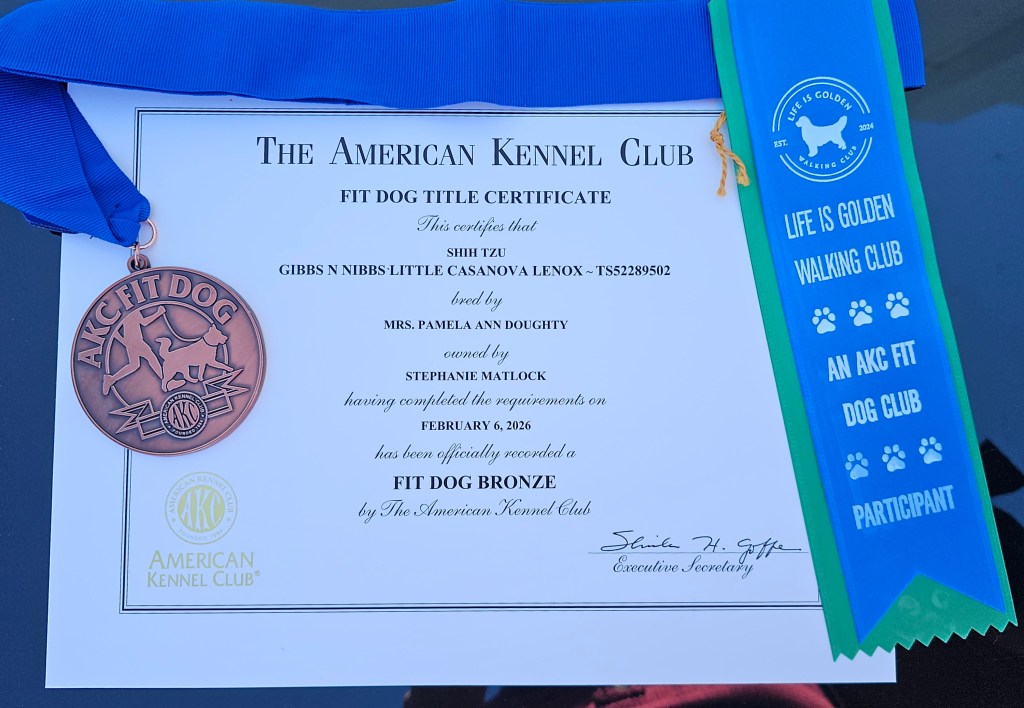
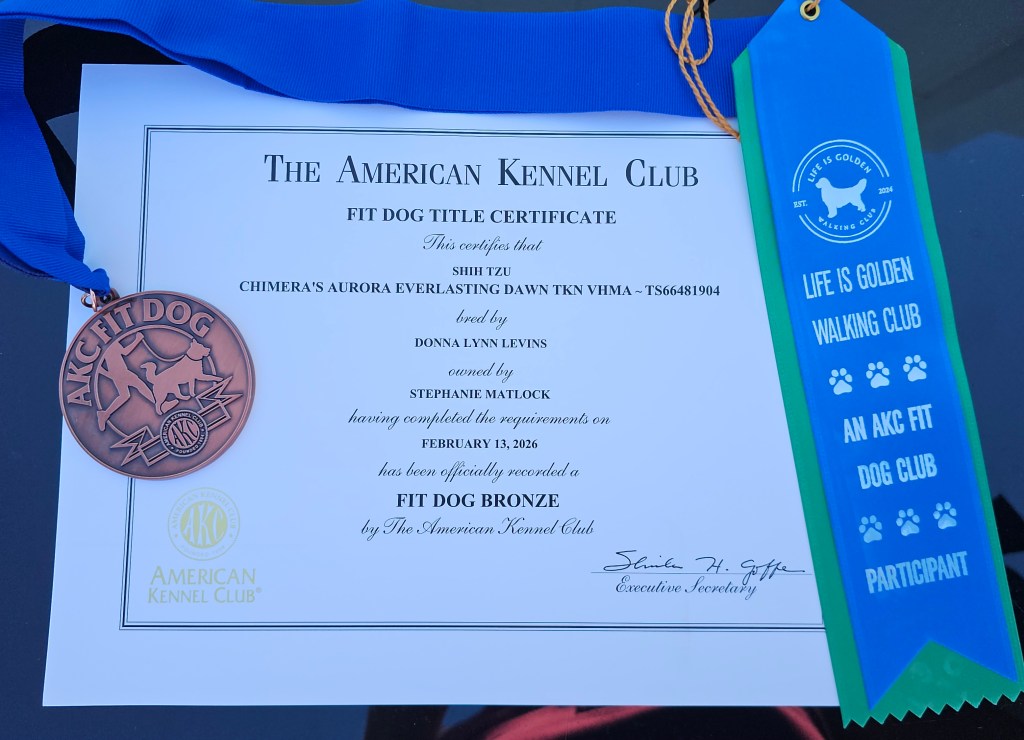
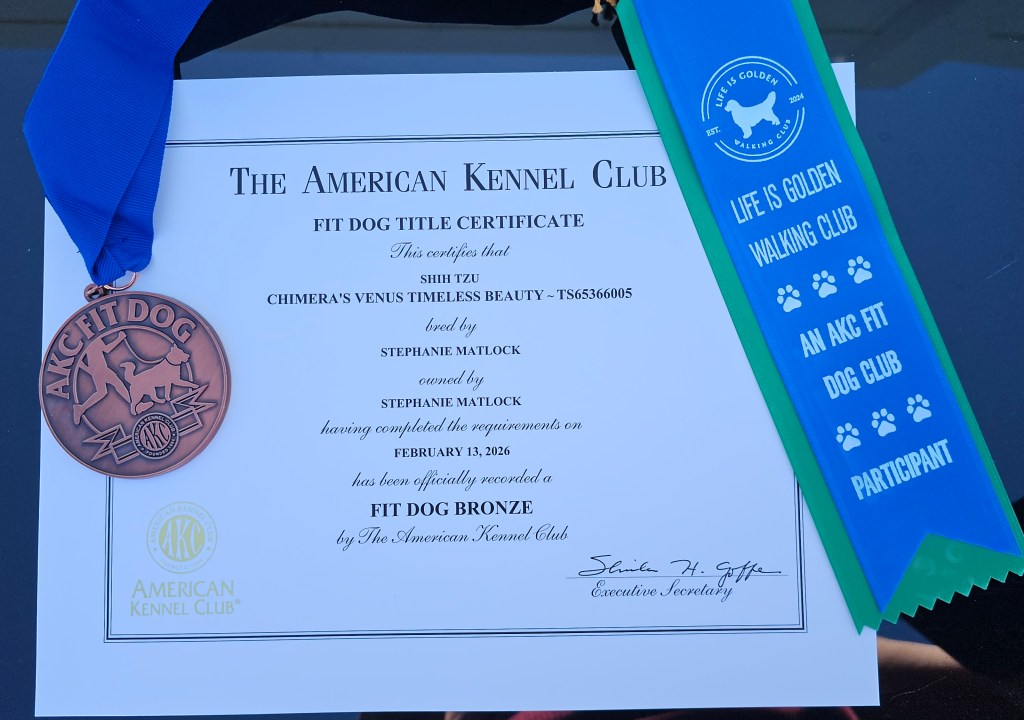
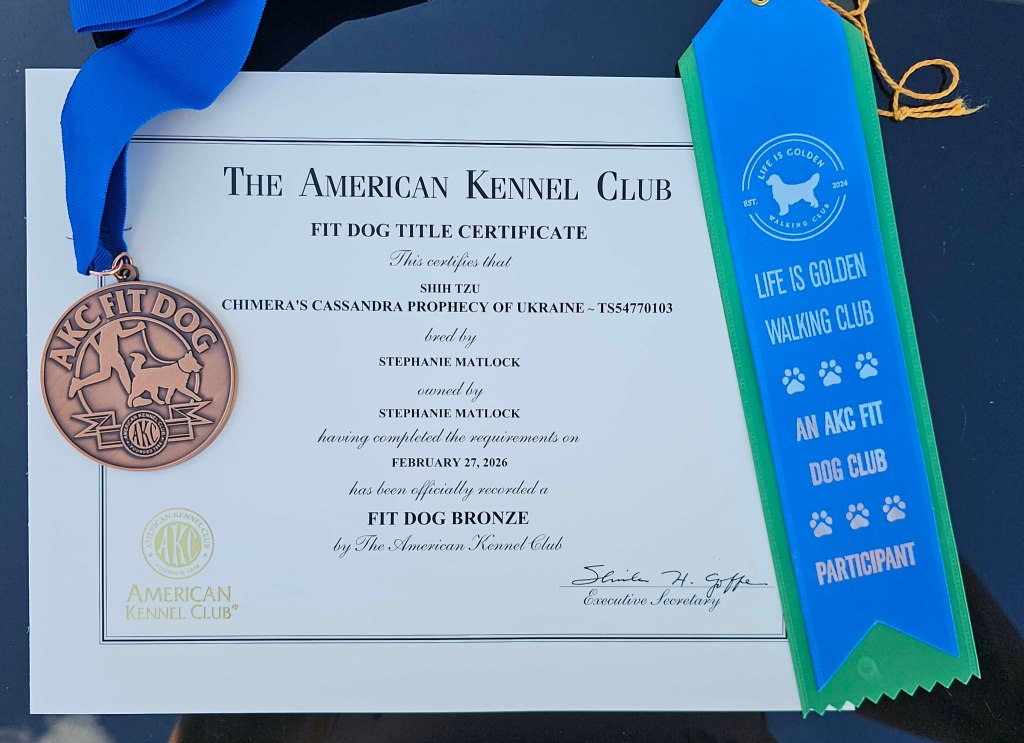
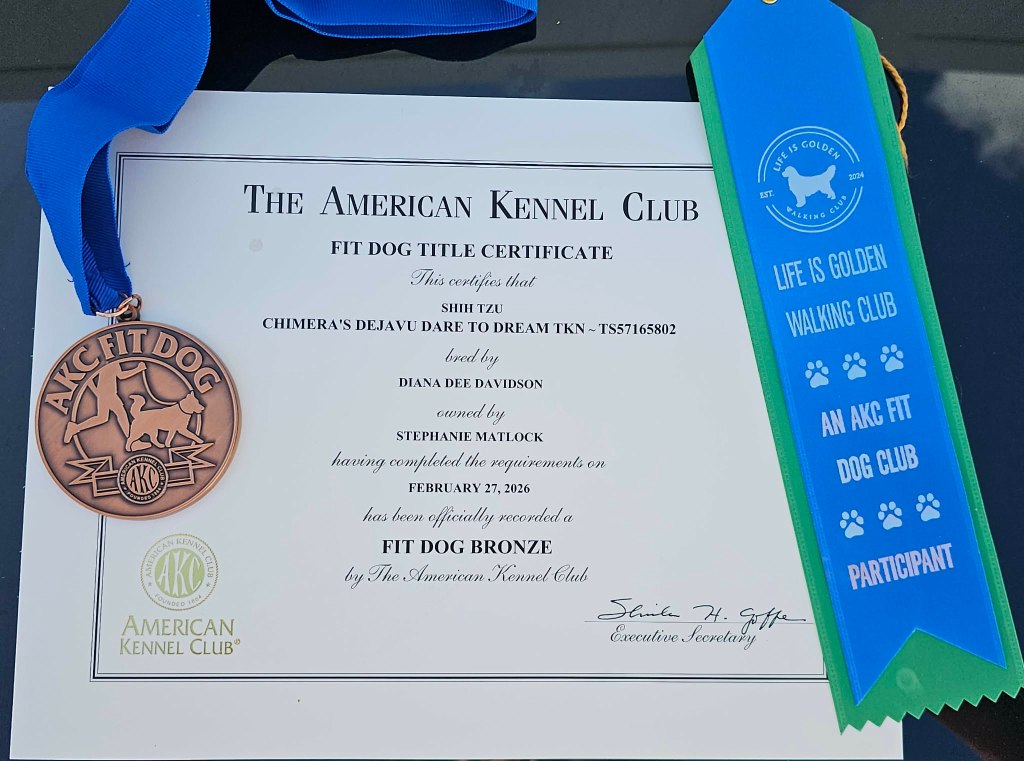
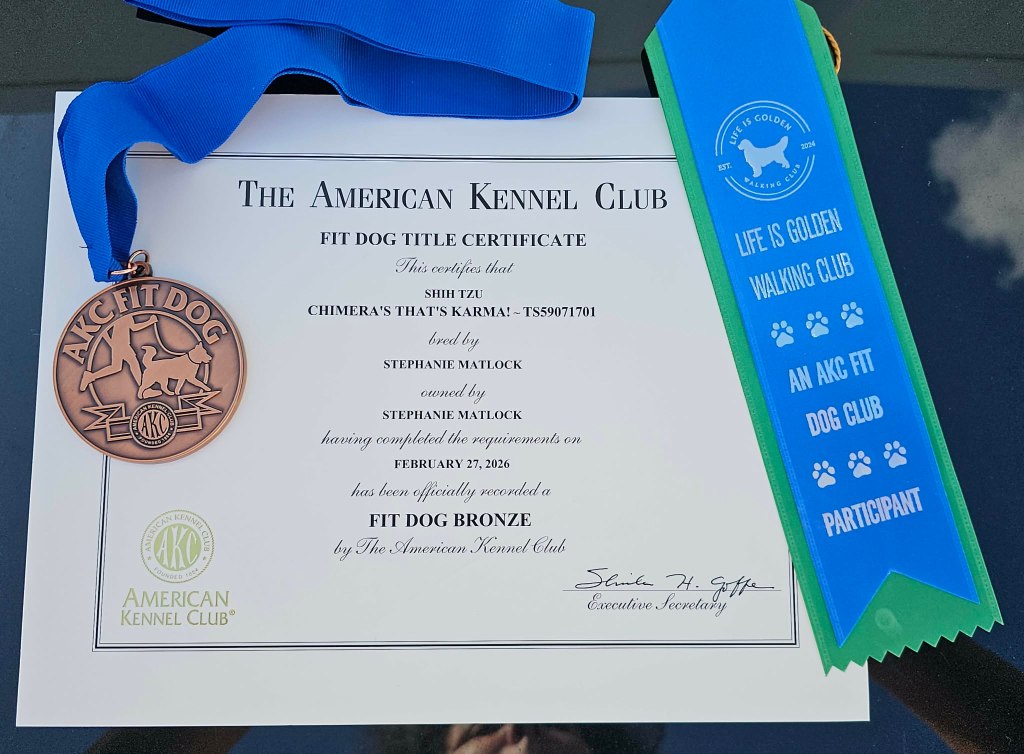
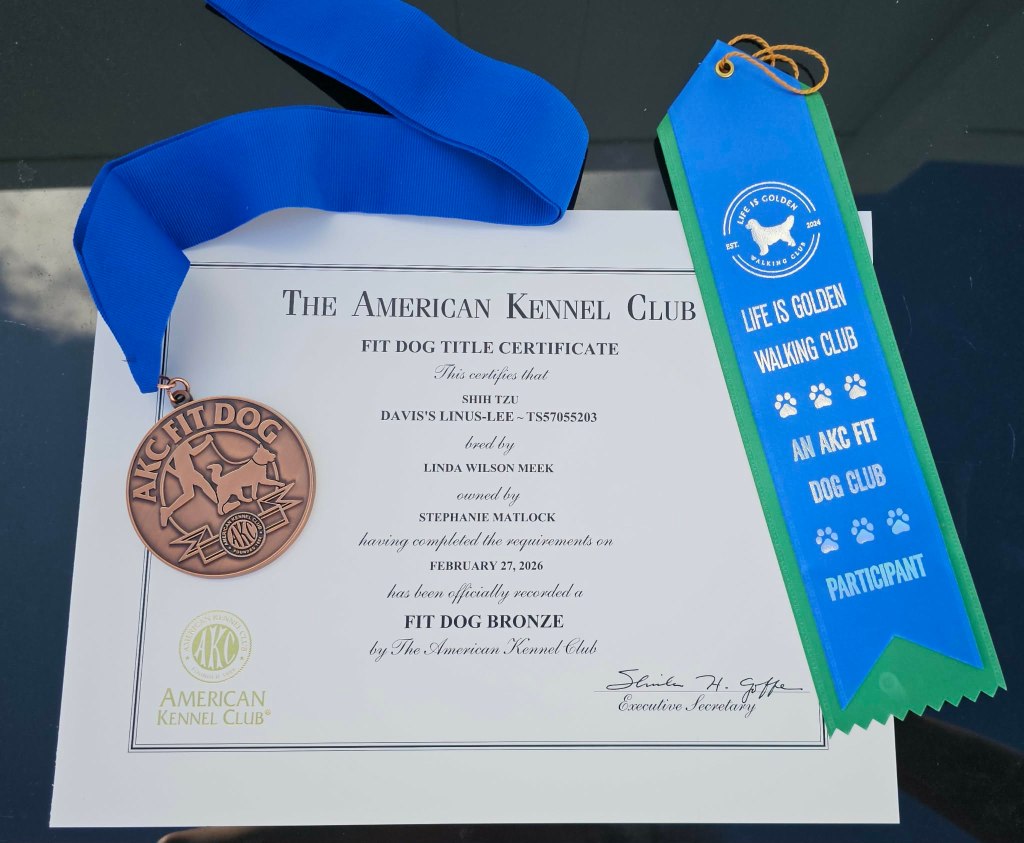
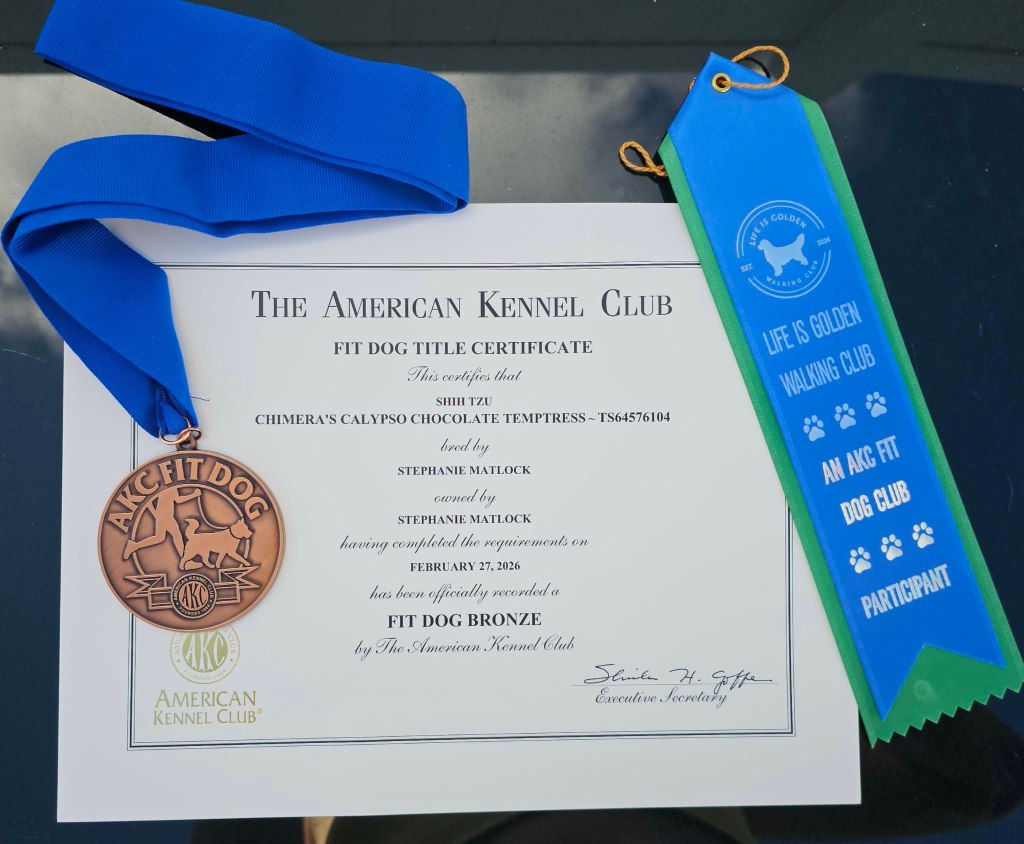
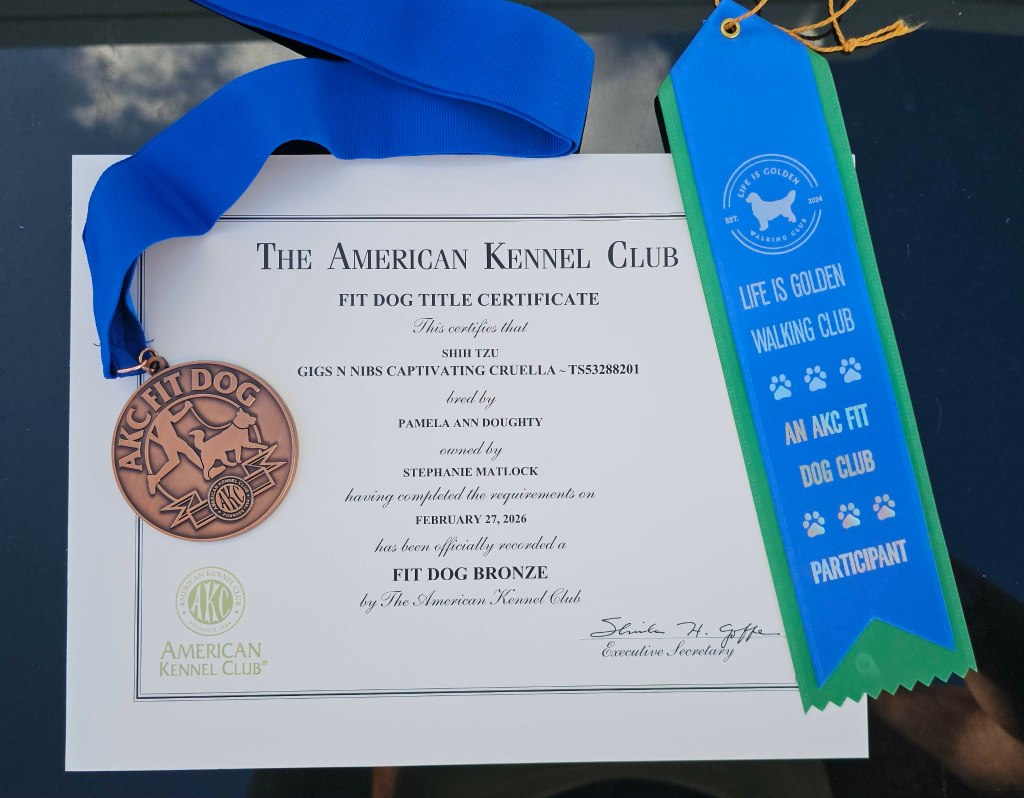
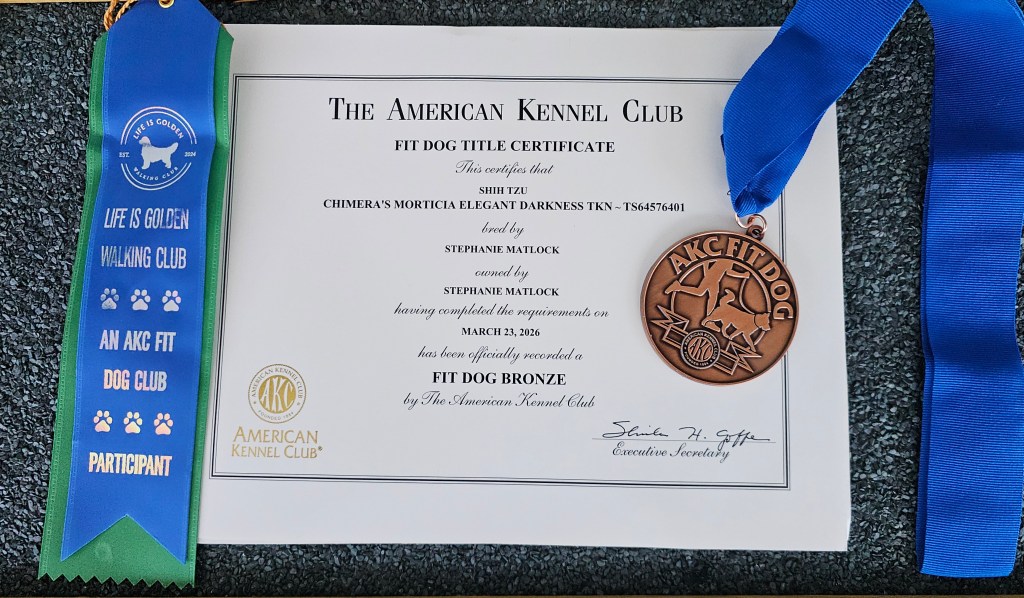
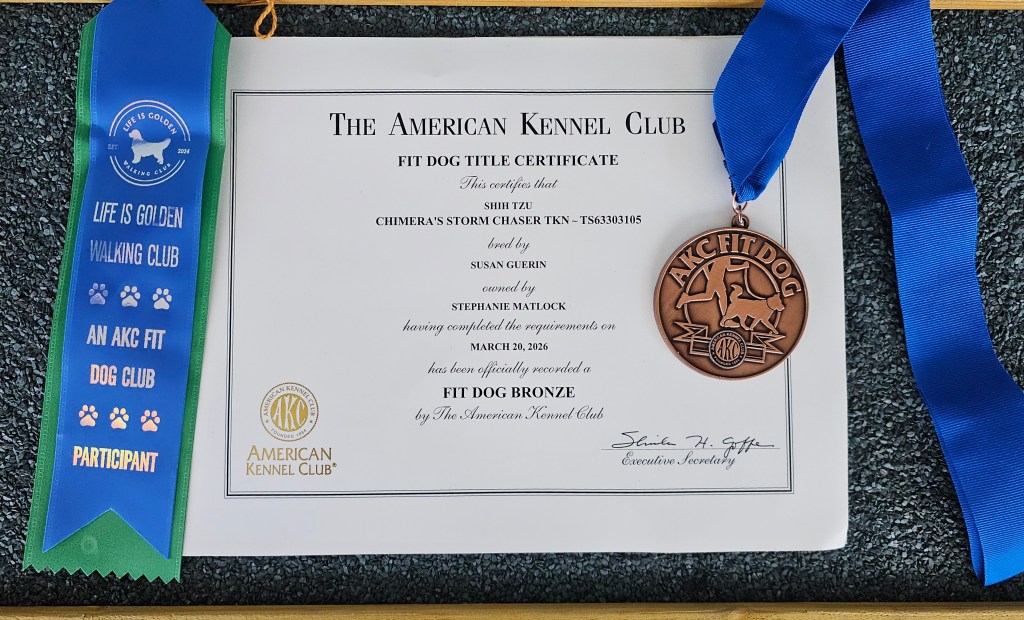
This program is designed to encourage dogs and their owners to be active together through titles. The AKC Fit Dog is honestly one of the easiest titles to get. As a brachycephalic breed, I do believe it’s one of the most important to showcase the health and fitness of our dogs.
A core component of the AKC FIT DOG program is walking with your dog, something most of us do with our dogs every day. Walking is a gentle exercise that can help to improve circulation, muscular strength, improve overall health for both dogs and people, and now walking the dog can put you on the path towards new titles.
There are three levels of AKC FIT DOG titles that dogs can earn: Bronze, which is the novice level, and then Silver, and, at the most advanced, Gold. To earn these fitness titles, dogs must earn a specific number of activity points which varies based on the type of activity, and title level.
AKC Fitness Title Categories:
- AKC FIT DOG Training Course
- Runs (community runs such as a Turkey Trot, Spring Scurry, etc.)
- Walks and hikes (Independent or Group)
- Unique to You and Your Dog (e.g., swimming, Parkour)
- AKC title that is fitness related (e.g., FAST CAT, agility)
- AKC Parent Club Performance Titles (e.g., pack dog, sledding)
 Chimera Shih Tzu